
What does Unknown mean in email verification?
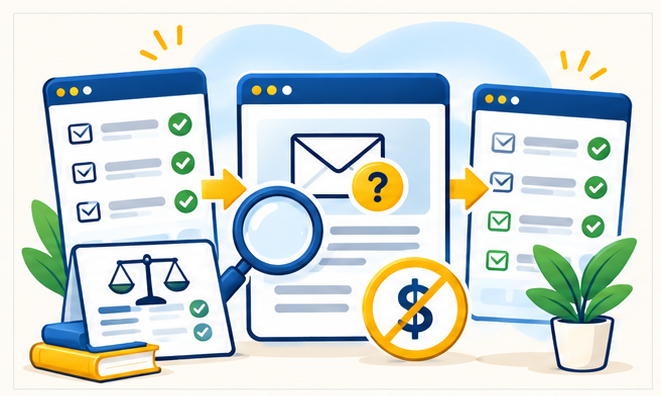
Unknown means the verifier did not get enough reliable evidence to classify the mailbox confidently. The address may still be real, but the receiving infrastructure did not provide a strong enough signal for a supported Valid or Invalid conclusion. For the full explanation, read what an Unknown result means.
Temporary failures, connection timeouts, greylisting, security gateways, policy blocks, a failed domain lookup, and other server behavior can all make a mailbox difficult to verify from the outside.
Unknown should therefore be treated as an evidence problem, not automatically as a bad address.
How DD Verify bills Unknown results
DD Verify does not consume a purchased credit when the final result is Unknown. Valid, Invalid, and Catch-All consume one purchased credit each. Duplicates within the same batch also consume zero purchased credits.
The daily free allowance works differently. Attempted non-duplicate checks count against the free daily allowance even if the final result is Unknown.
This keeps the purchased-credit rule aligned with the value of the result while still preventing unlimited free retries.
- Valid: 1 purchased credit
- Invalid: 1 purchased credit
- Catch-All: 1 purchased credit
- Unknown: 0 purchased credits
- Duplicate in the same batch: 0 purchased credits
Want to check an email while you’re here?
Use DD Verify to check an address yourself. You’ll get the verification result plus the underlying signals we can safely surface.
Check an email
Need to verify a full list?
Use DD VerifyWhy this changes the real price
Imagine you purchase enough credits for a 10,000-address list and 800 checks come back Unknown. If every attempted result consumes a credit, all 10,000 checks reduce the balance.
Under DD Verify's rule, those 800 Unknown results do not consume purchased credits. That means the headline cost per credit does not tell the full story when comparing providers.
The more difficult the list, the more important this billing rule can become.
How to check another provider's Unknown billing
Billing terms vary by provider and can change over time, so this page does not make claims about any other service. Check each provider's current pricing or billing terms for how Unknown or unverifiable results are charged.
Do not rely on an old comparison article when buying. The goal is not to find a provider that uses the same label as DD Verify. It is to understand exactly which outcomes consume your balance.
Catch-All is not the same as Unknown
DD Verify treats Catch-All separately from Unknown. A Catch-All result means the domain accepts recipients broadly enough that ordinary mailbox probing cannot confidently establish the individual mailbox. The guide to how Catch-All differs from Unknown covers the difference.
That is still a useful result about the domain's behavior, so Catch-All consumes one purchased credit. Unknown means the verification did not reach a reliable enough conclusion for the final classification.
Keeping those states separate makes both the result and the billing logic easier to understand.
What to ask before buying credits
When comparing verification providers, ask what happens to every major result type, not just how many credits the package contains.
A low-cost package can become less attractive if Unknown results, duplicates, or expiring balances consume more of the purchase than expected.
- Do Unknown or unverifiable results consume credits?
- Are Catch-All results billed?
- Are duplicate rows charged?
- Do unused credits expire?
- Are there different rules for free and purchased usage?
- Are refunded credits automatic or conditional?
Compare policies using your own list
If Unknown-result billing matters to you, test the same representative sample across the providers you are considering. Record the number of definitive results, Catch-All results, Unknown results, and the credits actually consumed.
That gives you a real effective cost instead of relying on the price printed next to a package size.
You can check a list with DD Verify and review the current credit structure on DD Verify pricing.
Common questions
Do email verifiers charge for Unknown results?
It depends on the provider. Check each provider's current billing terms for how Unknown or unverifiable results are charged.
Does DD Verify charge for Unknown results?
No. Unknown results do not consume purchased DD Verify credits. Valid, Invalid, and Catch-All results consume one purchased credit.
Why would an email verification result be Unknown?
Unknown can occur when the receiving mail system does not provide enough reliable evidence because of temporary failures, timeouts, greylisting, policy blocks, security gateways, a failed domain lookup, or similar behavior.
Does Catch-All consume a DD Verify credit?
Yes. Catch-All consumes one purchased credit because it is a useful result about the receiving domain's behavior, even though it does not confirm the individual mailbox.
Are duplicate rows charged?
Duplicates within the same DD Verify batch do not consume purchased credits.
Final thoughts
Email verifiers do not all bill Unknown results the same way, so the answer depends on the provider. This matters because an Unknown result is not the same as a definitive mailbox conclusion. If a difficult list returns many Unknown results, the way they are billed can change your real cost. This page explains how DD Verify bills them and what to check in any provider's terms.
Want to check an email while you’re here?
Use DD Verify to check an address yourself. You’ll get the verification result plus the underlying signals we can safely surface.
Need help improving your business data?
DataDabble can research, clean, enrich, and maintain the records your team depends on.


