Start with a profile, not a fix
Before changing a single cell, profile the dataset: row counts, null rates per column, distinct value counts, and value ranges. Cleaning without a profile means you cannot prove the file improved.
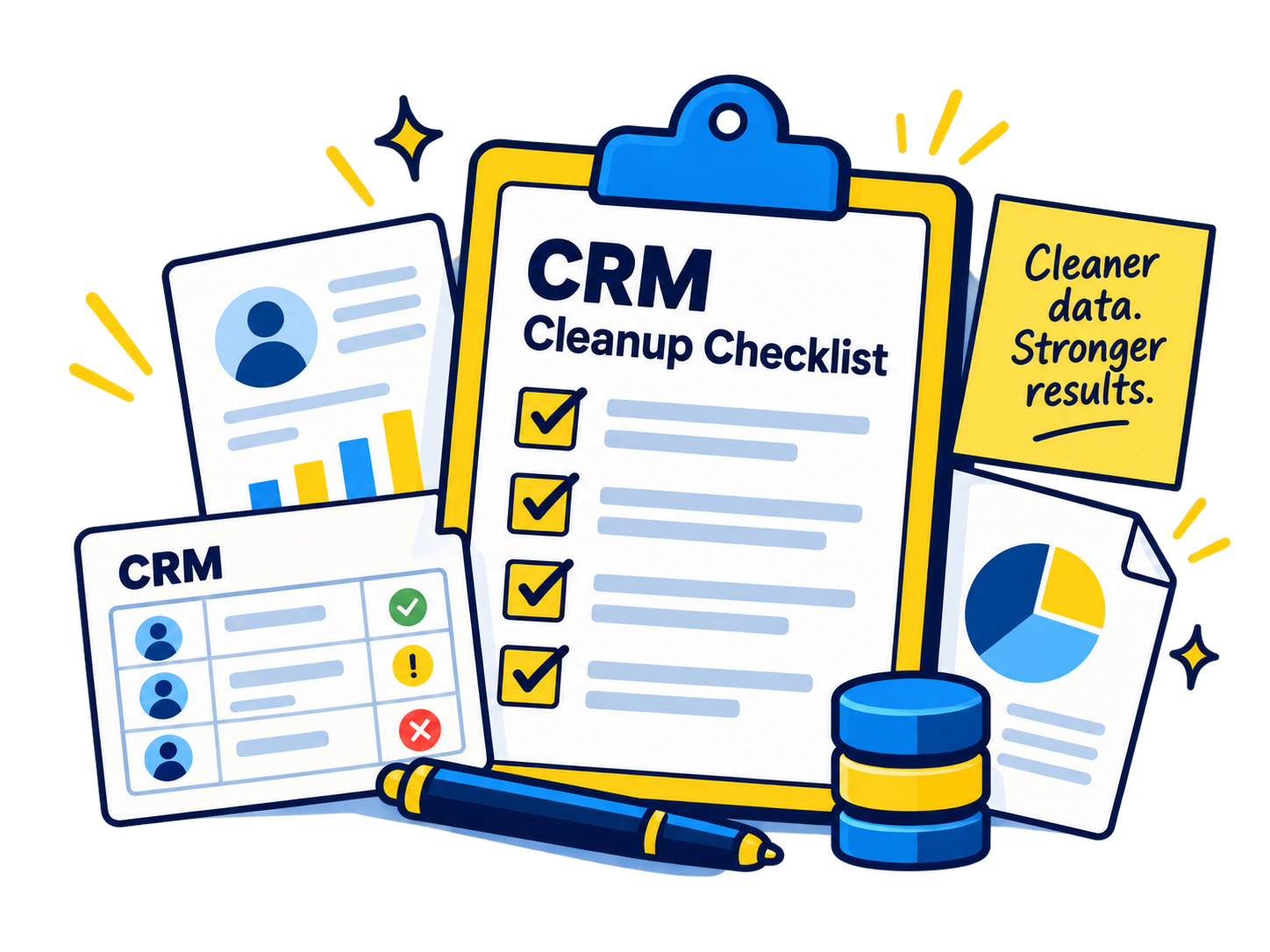
The core checklist
Work through these in order — each step makes the next one cheaper.
- Standardize structure: one header row, one record per row, consistent column names
- Normalize formats: dates, currencies, country codes, phone formats, casing
- Deduplicate with a documented match rule, not a gut check
- Validate against reality: email syntax and deliverability, domain existence, ranges
- Handle blanks explicitly — blank, unknown, and not applicable are three different things
- Record every transformation so the file is reproducible next quarter
Make it repeatable
A one-time cleanup buys you a quarter. A documented rule set plus an owner buys you a year. Assign a data owner for each critical field and define what 'valid' means for it in writing.
Common questions
How long does a data cleaning project take?
For a single source of under 100k rows with clear rules, days. Multi-source consolidation with conflicting definitions usually takes weeks, and most of that time is spent agreeing on definitions.
Should cleaning happen before or after loading into a warehouse?
Load raw, then transform. Keeping an untouched raw layer means you can re-run corrected logic without re-collecting the source.
Final thoughts
Dashboards rarely fail because of the chart. They fail because two spellings of the same customer name split one account into two, and nobody caught it before the board meeting.
Need help improving your business data?
DataDabble can research, clean, enrich, and maintain the records your team depends on.