Outsource when the enrichment work is stealing specialist time
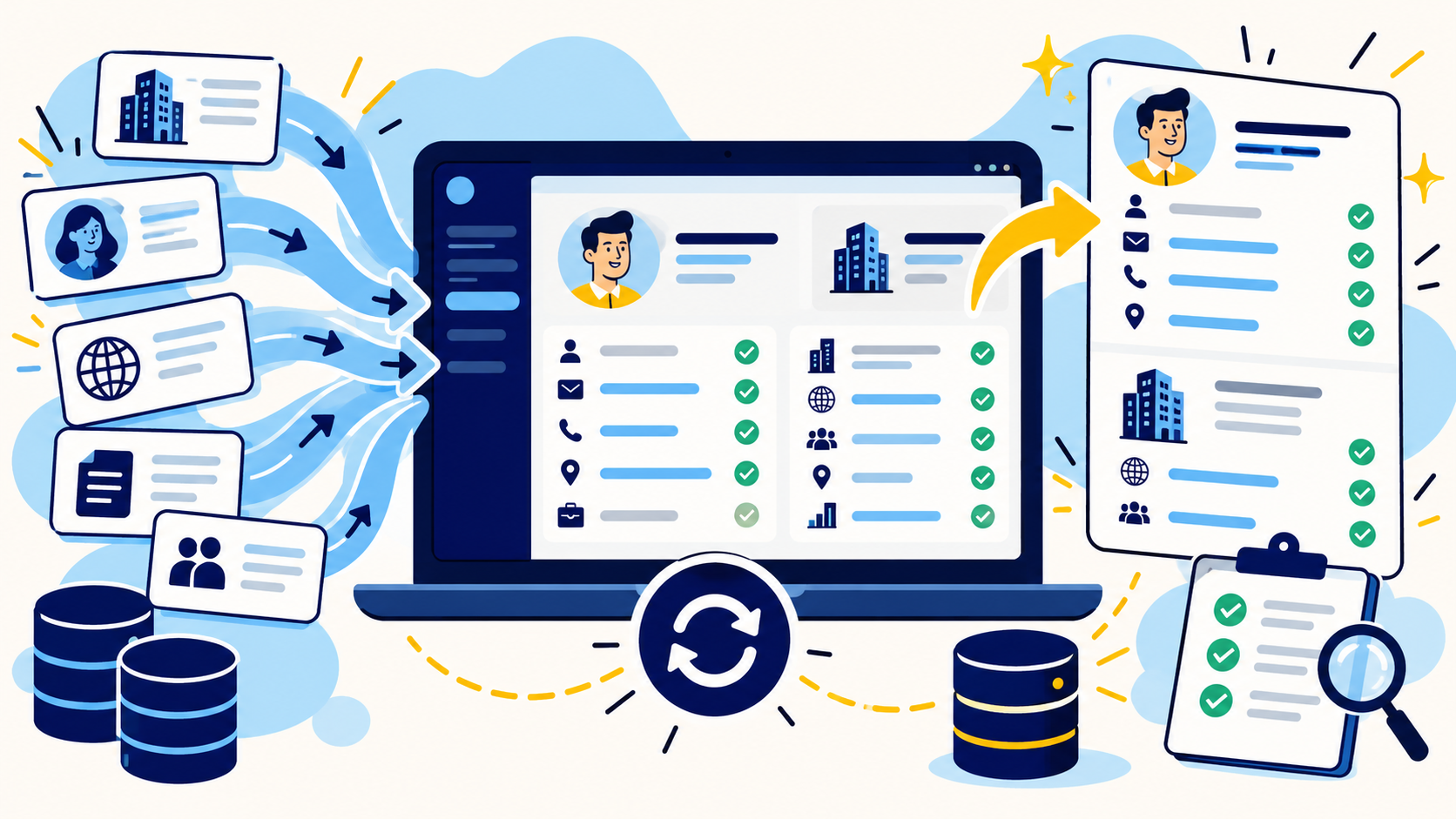
A salesperson should not spend hours checking company websites, validating business emails, or standardizing records before outreach. A marketplace manager should not lose a day manually filling catalog attributes that can be researched and structured by a dedicated data workflow. When skilled employees are repeatedly performing low-leverage enrichment tasks, the labor cost is larger than the line item on a vendor quote.
Document how much internal time the work currently consumes. Include research, verification, rework, duplicate cleanup, formatting, and import preparation. That gives you a more realistic comparison than looking only at the cost of a data tool.
Outsource when the records require judgment
Automation is strongest when the input is clean, the match keys are reliable, and the requested fields are common. Human-supported enrichment becomes more valuable when several companies have similar names, contacts have changed jobs, titles do not map cleanly to your targeting rules, company structures are ambiguous, or the requested fields require web research.
This is also where multi-source workflows can create work instead of removing it. A waterfall may increase coverage, but someone still needs to decide what happens when providers disagree or when a returned value does not meet the project's definition.
Outsource when quality failures are expensive downstream
The more systems or teams that depend on the data, the more expensive a bad enrichment decision becomes. An incorrect contact can waste one outreach attempt. An incorrect territory field can route many records incorrectly. A bad company match can contaminate reporting, automation, and future enrichment.
Projects tied to CRM migrations, segmentation, account scoring, high-value outreach, product catalogs, or system integrations deserve stronger QA because the same mistake can propagate. If the internal team does not have time to build that QA layer, outsourcing can be a risk-control decision as much as a capacity decision.
Keep enrichment in-house when the workflow is simple and repeatable
Not every enrichment project should be outsourced. If one data provider covers the target market well, the required fields are standard, the records have reliable identifiers, and the team already has a controlled CRM or API workflow, internal automation may be the better option.
HubSpot and Apollo both support ongoing enrichment workflows inside or around CRM systems, while API-first providers can support custom pipelines. Those approaches are efficient when the rules are stable and exceptions are limited.
A hybrid model is often the strongest option
Many teams do not need to choose between full automation and full outsourcing. Use software for high-confidence, repeatable fields and send the difficult remainder to human research. This preserves the speed of automated enrichment while reserving manual effort for records where judgment actually changes the outcome.
A simple example is business email enrichment. A tool may confidently verify most emails. The unresolved records can then move to secondary sources or manual research instead of forcing a researcher to handle every record from the start.
Use five questions to make the decision
Before outsourcing, score the project on complexity, scale, internal capacity, quality risk, and repeatability. High complexity, meaningful scale, limited internal capacity, and high downstream risk all push the decision toward a managed partner. High repeatability and strong internal systems push it toward automation.
The best outsourcing decision is specific. Do not outsource the entire data workflow if only one stage is creating the bottleneck. A partner can own sourcing, exception research, validation, QA, or recurring maintenance while your team keeps the parts that are already working well.
- Complexity: how many records require interpretation or research?
- Scale: how much volume must be processed and refreshed?
- Capacity: who internally has time to own the work?
- Risk: what happens if a critical field is wrong?
- Repeatability: can the workflow be automated with stable rules?
Common questions
When should a company outsource data enrichment?
Outsourcing is most useful when enrichment is research-heavy, high-volume, exception-heavy, strategically important, or consuming too much internal specialist time.
Is outsourcing better than using a data enrichment tool?
Not always. Tools are efficient for repeatable, well-covered fields. Outsourcing adds more value when records require judgment, custom research, exception handling, or stronger QA.
Can I outsource only part of the enrichment workflow?
Yes. A hybrid model can automate high-confidence fields while a partner handles unresolved records, custom research, validation, formatting, or QA.
What should be included in an outsourced enrichment scope?
Define required fields, source preferences, record matching rules, formatting, verification standards, duplicate handling, exception rules, and the final delivery format before work begins.
Final thoughts
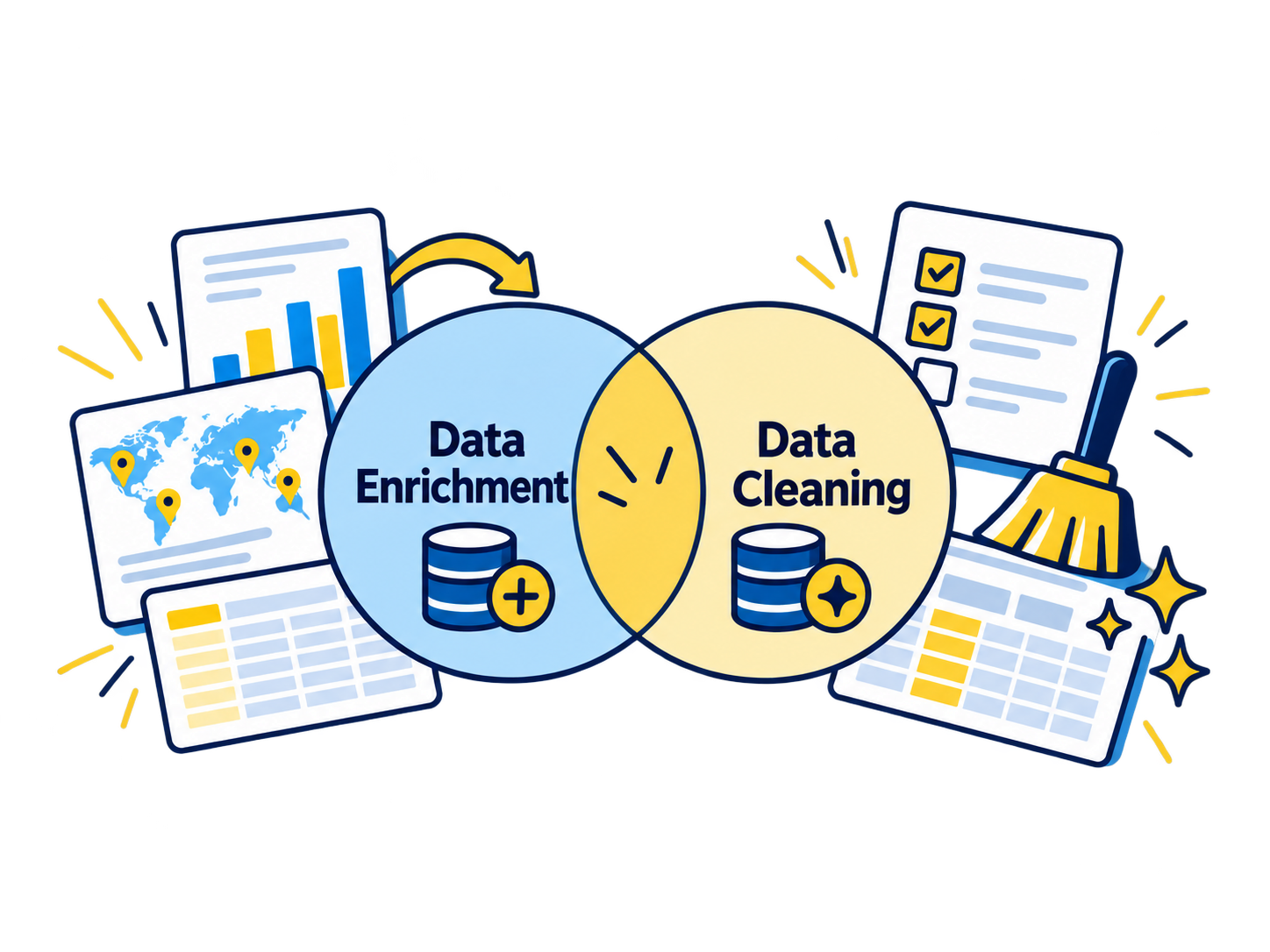
Outsourcing data enrichment makes sense when the work is important enough to require reliable output but repetitive or research-heavy enough to consume internal capacity. The decision is not simply tool versus people. It is a question of where the matching, research, verification, formatting, and exception handling can be done most efficiently without lowering the quality of the data your team depends on.
Need help improving your business data?
DataDabble can research, clean, enrich, and maintain the records your team depends on.