Clean the company layer before the contact layer
A contact record cannot be trustworthy if the company match is wrong. Start with company name, website or domain, location, parent-child relationships, and any stable account identifier available.
Standardize obvious naming variants, but do not merge companies simply because the names look similar. Franchises, subsidiaries, regional entities, and companies with shared brands can require manual review.
Verify that contacts still belong to the account
Job changes are a major source of B2B decay. A valid business email attached to an outdated role can still create a bad sales record. Review current company, title, department, and seniority for contacts that will be used in active outreach.
For higher-value lists, keep source context such as a current public professional profile or company page so the record can be reviewed later without repeating the entire research process.
Standardize the fields sales and CRM workflows depend on
B2B datasets often combine exports from CRMs, prospecting platforms, spreadsheets, and manual research. The same field can arrive with different casing, abbreviations, picklist values, phone formats, or company naming conventions.
Map those values to one controlled schema before import or handoff. Consistent fields improve filtering, territory rules, personalization, reporting, and duplicate detection.
Deduplicate companies and contacts separately
Company duplicates and contact duplicates are different problems. Two contacts at the same company may be intentional, while two company records for the same domain may split activity, ownership, and reporting across duplicate accounts.
Use company-level identifiers for account deduplication and person-level identifiers for contact deduplication. Define which values survive a merge and preserve fields that carry useful source or verification information.
Verify business emails and suppress unusable records
Email verification should happen close enough to use that the result still matters. Separate valid, catch-all, unknown, and invalid records according to the verification method your team uses rather than treating every populated email field as equal.
Suppression matters too. Opt-outs, known bad addresses, internal exclusions, previous hard bounces, and other do-not-contact rules should survive list refreshes and enrichment projects instead of being reintroduced from a new data source.
Use field-level QA instead of one generic accuracy score
Different fields decay at different speeds and carry different risk. A company domain may remain stable for years while a person's title can change quickly. An industry label can be subjective while an email verification result is more binary.
Define QA rules by field. For example, company match, current title, direct business email, and duplicate status may require stronger checks for an outbound list than descriptive firmographic fields used only for segmentation.
Make cleansing recurring, not a rescue project
B2B data changes continuously, so a one-time cleanup eventually becomes stale. Build recurring review into the workflow for active lists, high-value accounts, recently changed contacts, and records that repeatedly fail automation or outreach checks.
The best cleansing process also fixes the source of the problem. If the same duplicate pattern or formatting error returns every month, update the intake rule, import mapping, form, integration, or SOP that keeps creating it.
Common questions
What is B2B data cleansing?
B2B data cleansing is the process of correcting, standardizing, verifying, deduplicating, and maintaining company and contact records used in sales, marketing, CRM, and operational workflows.
What should be cleaned first in a B2B database?
Start with the fields that determine identity and downstream action: company match, domain, contact-company relationship, duplicate status, current role, and business email.
Is B2B data cleansing the same as enrichment?
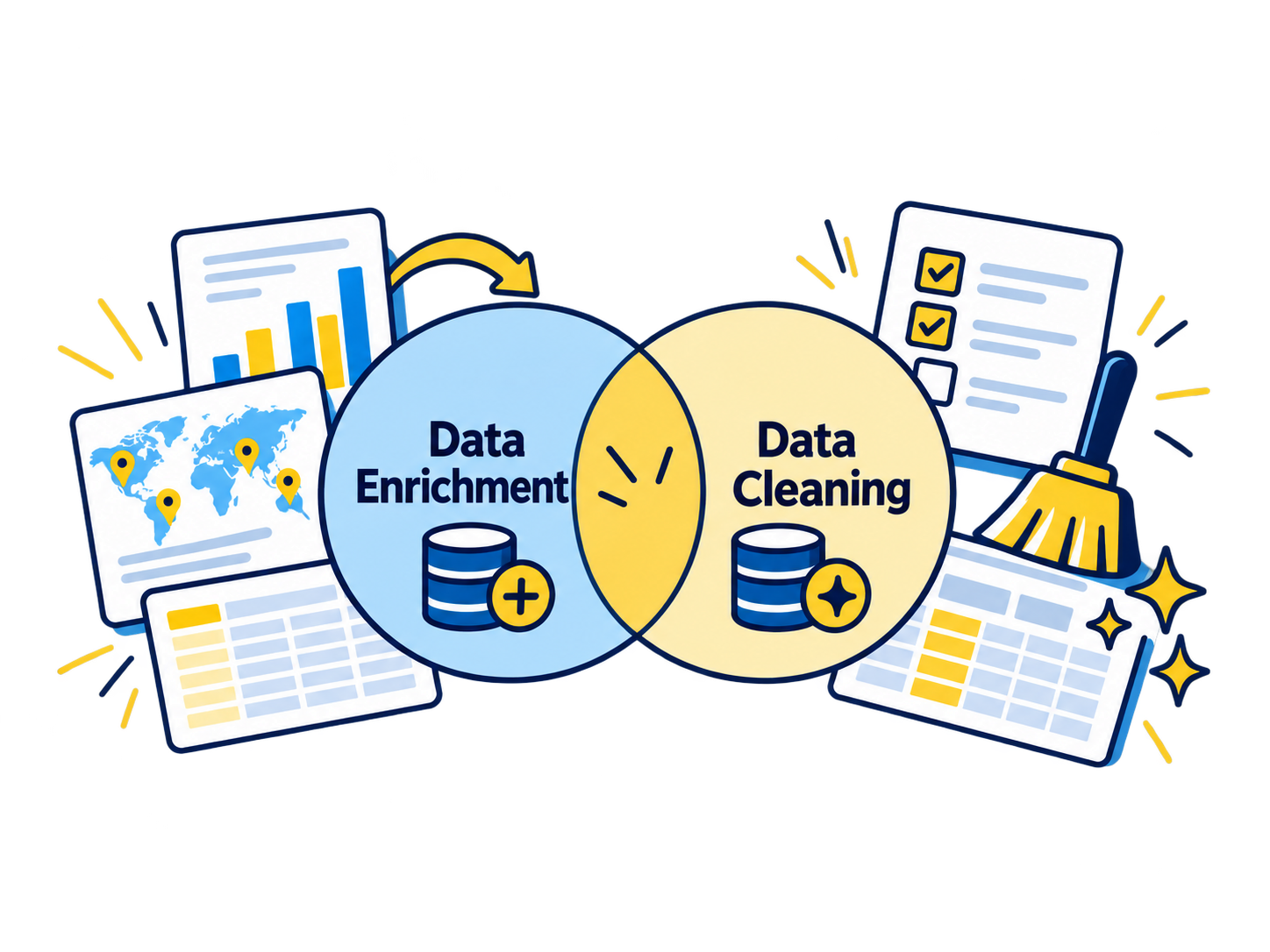
No. Cleansing fixes or standardizes data that already exists. Enrichment adds missing context. A strong workflow often cleans first, then enriches, then validates the final output.
How often should B2B data be cleansed?
Frequency should match usage and risk. Active outreach lists and high-value CRM records need more frequent review than archival data, and recurring rules are more effective than occasional large cleanup projects.
Final thoughts
B2B data cleansing focuses on the company and contact records that sales, marketing, operations, and CRM workflows depend on. The goal is not simply to make a spreadsheet look tidy. It is to make sure the right company is matched to the right contact, the critical fields are current enough to use, duplicates are controlled, and unreliable records are not quietly pushed into outreach or automation.
Need help improving your business data?
DataDabble can research, clean, enrich, and maintain the records your team depends on.